
Vanya Dayı
“Vanya Dayi”, 1900’lü yillarin Rusya’sinda bir köy çiftlik evi yasantisini yansitir. Emekli profesör Serebryakov genç ve güzel karisi Yelena'yla dinlenmek üzere ölmüs eski karisindan miras kalan çiftlik evlerine gelirler.
- Yazan
- Anton Çehov
- Çeviren - Yöneten
- Nesrin Kazankaya
- İlk Sahnelenme
- 15 Mayıs 2010

Klasik bir basyapit olan Rus yazar Anton Çehov’un yazdigi Nesrin Kazankaya’nin çevirip yönettigi “Vanya Dayi” adli oyunu, 17.Uluslararasi 2010 Tiyatro Festivali’nde 15 Mayis’ta prömiyer yapiyor. Dramaturgisini Safak Eruyar’in, isik tasarimini Yüksel Aymaz’in, dekorunu Basak Özdogan’in, kostümünü Fatma Öztürk Dönmez’in, müzik yönetmenligini Ezgi Kasapoglu’nun, nota yazimini Emil Tan Erten’in yaptigi oyunda görev alan sanatçilar: Levend Öktem,Selçuk Yöntem, Can Kolukisa, Nesrin Kazankaya, Linda Çandir, Aysan Sümercan, Ilker Yigen, Zeynep Özden, Volkan Aktan, Ömer Ivedi, Oguz Turgutgenç, Evrim Artut.
“Vanya Dayi”, 1900’lü yillarin Rusya’sinda bir köy çiftlik evi yasantisini yansitir. Emekli profesör Serebryakov genç ve güzel karisi Yelena'yla dinlenmek üzere ölmüs eski karisindan miras kalan çiftlik evlerine gelirler. Serebryakov yasli, hasta ve çevresiyle iletisim kurmada mesafeli bir bilim adamidir. Profesörün eski karisinin erkek kardesi olan Vanya, annesi Mariya, yegeni Sonya ve dadi Marina ile birlikte çiftlikte yasamaktadir. Vanya, hayatini çiftligin idaresine adamis ve çiftligin gelirine dokunmaksizin bir ideal ugruna profesörün kariyeri için fedakarca kullanmistir. Çiftligi ayakta tutmak ideali yüzünden kendine bir yasam kuramayan ve geleneksel bir köy yasantisina hapsolmus Vanya, profesörün genç ve güzel karisi Yelena’ya umutsuzca tutkundur. Yasli ve hasta kocasindan ilgi görmeyen Yelena ise ailenin yakin dostu çevreci doktor Astrov’la flört etmektedir. Vanya dayisiyla çiftlikte yasayan profesörün kizi Sonya da Astrov’a asiktir. Profesörün çiftlige gelmesiyle birlikte iliskiler ve yasamlar alt üst olur. Beklentiler ve umutlar acimasizca gerilimli iliskiler düzleminde sorgulanir. Profesörün çiftligi satma karariyla Vanya kendini kaybeder ve profesörü öldürmeye kalkisir ama basaramaz. Çiftlikte artik hiçbir sey eskisi gibi degildir. Profesör ve karisi Yelena çiftlikten ayrilirlar. Vanya, yegeni Sonya ile birlikte çiftlik yasamina kaldiklari yerden devam ederler.
Çehov’un “Köy Yasamindan Sahneler” adini da verdigi oyun, 19.yüzyilin devrim arifesini yasayan Rusya’sinda, degismekte olan siyasal sistem ve sinifsal degerlerin toplumsal yasamda yarattigi uzlasmaz çeliskileri, bir köy çiftlik evi yasantisindan yansitir. Köy yasamina sikismis aydinlarin dayanilmaz varoluslari, monotonluk, umutsuzluk, eylemsizlik, tembellik ve mutsuzlukla kusatilmistir. Bir yanda yükselen bir deger olarak isçi sinifinin dinamik varoluslari, öte yanda aydin insanlarin duygusal yasamlarindaki açmazlar diyalektik bir yasanti içinde geçis dönemi Rusya'sinin sancili yillarinin da bir iz düsümünü olusturur. Geçmislerine sikisan ve bugünü yasamakta zorlanan Çehov'un oyun kisileri, geleceklerine yönelik umutsuz ve umarsiz bir bekleyis içindedirler.
Oyun, tüm sahnelerin simultane görünebilir kilindigi; çalisanlar ve çiftlik sahipleri arasindaki sinifsal çeliskinin gerek davranis gerekse canli müzik kullanimiyla algilanip anlasilacagi bir yorumla sahnelenmektedir.
- Yazan
- Anton Çehov
- Çeviren - Yöneten
- Nesrin Kazankaya
- Dramaturgi
- Şafak Eruyar
- Dekor
- Başak Özdoğan
- Kostüm
- Fatoş Öztürk
- Işık
- Yüksel Aymaz
- Müzik Yönetmeni
- Ezgi Kasapoğlu
- Yön. Yrd
- Zeynep Özden
- VanyaLevend Öktem
- AstrovSelçuk Yöntem
- YelenaNesrin Kazankaya
- SonyaLinda Çandır
- SerebryakovCan Kolukısa
- MariyaAysan Sümercan
- Telyeginİlker Yiğen
- MarinaZeynep Özden
- KöylülerVolkan Aktan
- Ömer İvedi
- Oğuz Turgutgenç
- Evrim Artut
17.05.2010, Laurence Raw

Uncle Vanya by Anton Chekhov, translated and directed by Nesrin Kazankaya. Performed by Tiyatro Pera at Tiyatro Pera, Istanbul, 15 May 2010. In repertory.
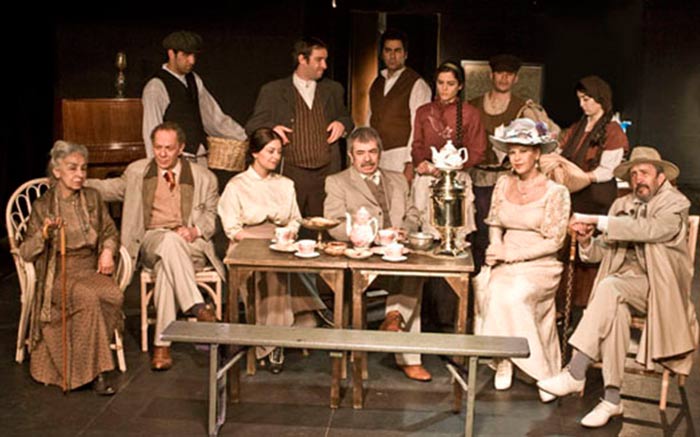
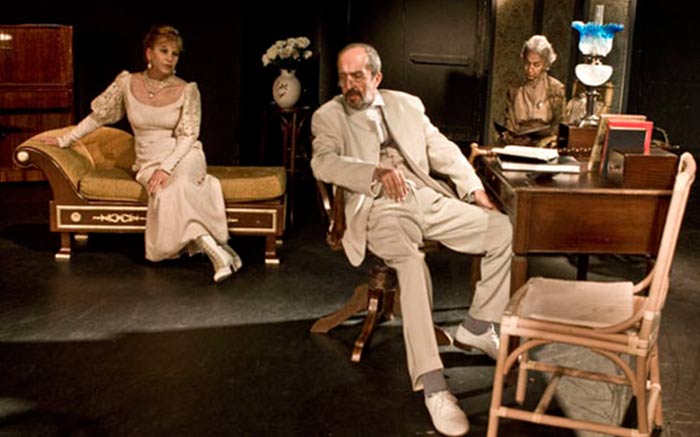
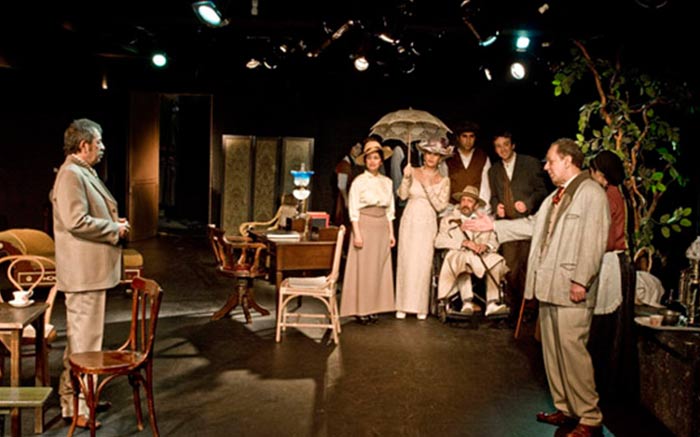
First published in 1896 and receiving its Moscow premiere three years later, Uncle Vanya is an ideal ensemble piece, providing numerous opportunities for the eight principal characters to disclose their feelings of hopelessness while trying to compensate for this hopelessness through incessant chatter.This aspect of the play was emphasized in Nesrin Kazankaya’s staging, which could best be described as centripetal in concept. At the beginning of each sequence of dialogue the characters moved from the sides of the Pera Theatre’s open stage towards a dining table and chairs placed at the centre of the playing area. They sat down or remained standing and commenced speaking; once they had finished speaking, they moved back to the sides of the playing area, to be replaced in the centre by another group of characters. The table and chairs became the site of conversation, while the audience looked on as if they had been invited to an early twentieth century Russian salon – a gathering of middle-class men and women seeking both to enjoy and educate themselves through conversation.In a programme-note, Kazankaya likened the play to a pastoral symphony in three acts: “The first act starts pianissimo […] [and] ends with an explosion of a night […] The next day, a hot summer noon opens the second act which starts allegretto. Then it transforms into a pianissimo night again …” This aspect of the production was underlined through speech-rhythms: in the first act the characters began by speaking serenely, listening to what one another was saying and then formulating well-crafted replies. By the end of the second act the atmosphere had changed: everyone tried to disclose their real feelings but soon understood that nobody was listening to them. This only served to increase their sense of emotional distress. Dr. Astrov (Selçuk Yöntem) turned to drink, while his way of speaking became more and more coarse, punctuated with frequent gasps for breath and vile scowls directed at no one in particular. Vanya’s (Levend Öktem’s) frustration was evident as he walked wildly round and round the playing area as if looking for a way out. The salon-like atmosphere could no longer satisfy him; he needed some alternative space to breathe. Unable to find any alternatives, he tried to commit suicide, but even this proved an absurd failure. All he could do was to complain to no one in particular: “I have no past, the present is awful because it’s so meaningless!” Yelena (Nesrin Kazankaya) likewise admitted that she saw no future for herself: “I don’t know what to do […] How am I suddenly to start teaching and doctoring them [the peasants] for no earthly reason?” Although her reactions were not as extreme as Vanya’s (the possibility of suicide never entered her mind), Yelena’s turbulent state of mind was evident in her rapid emotional shifts – laughter was abruptly followed by tears, then anger, and laughter once more.In the pianissimo mood of the third act everyone made strenuous efforts to recreate that urbane, civilized conversational atmosphere which characterized the first act. However we understood from their expressions that this task was futile: both Astrov and Yelena gazed longingly out towards the audience, while Marina (Zeynep Özden) looked towards the theatre exit, as if believing that she could solve her emotional turmoil by escaping from the production altogether. They were part of the dying world of the landed gentry, living in a limbo-like world of the past and unable to engage with a fast-changing outside world.
At the same time director Kazankaya suggested that their days were numbered. Both at the beginning and the end of the production we heard the sounds of the impending revolution (of January 1905) – the songs, and the peasants’ clamour – while at the back of the stage we saw the workers (Ömer Ivedi, Oguz Turgutgenç, Volkan Aktan, Özlem Kaynarca) bonding together by picking up implements and shaking hands with one another. They represented Russia’s future – a world of social equality and mutual cooperation that would sweep away the class-based society that had dominated the country under Tsar Nicholas II. Both Vanya and Astrov were well aware of this impending threat, as they glanced fearfully off stage as if expecting the workers to come and capture them at any moment. This knowledge only served to exacerbate their feeling of hopelessness.
Compared to other revivals, this Vanya placed greater emphasis on the play’s political aspects: Chekhov wrote it at a time when Russia was on the cusp of major social and political transformation. Nonetheless director Kazankaya paid scrupulous attention to character-development: we empathized with their respective predicaments, even though there was nothing we could do to alleviate them. In spite of the heat both inside and outside the theatre, this production was rapturously received by a packed house. I hope it remains part of Tiyatro Pera’s repertory for a long time to come.
Elestirinin Çevirisi:
Vanya Dayi-Yazan: Anton Çehov Çeviren ve Yöneten: Nesrin Kazankaya15 Mayis 2010’da Tiyatro Pera tarafindan Tiyatro Pera’da oynandi. Repertuvarda.
1896 yilinda yayinlanip, bundan 3 yil sonra Moskova’da prömiyer yapan Vanya Dayi; bir ensemble için ideal bir oyun. Sekiz asal karakter, ardi arkasi kesilmeyen konusmalariyla umutsuzluklarini dengelemeye çalisirken; oyun bu umutsuzluklarini açiga vurmalarina sayisiz olanak taniyor.
Oyunun en iyi sekilde “merkezcil” olarak adlandirilabilecek bu yönü, Nesrin Kazankaya’nin yorumunda vurgulanmis. Her sahnenin basinda karakterler Tiyatro Pera’nin açik sahnesinin iki yanindan giriyorlar ve oyun alaninin ortasindaki yemek masasi ve sandalyelere dogru ilerliyorlar. Oturuyor ya da ayakta kaliyor, konusmaya basliyorlar. Konusmalari bitince oyun alaninin gerisine, kenarlara çekiliyorlar ve ortayi baska karakterlere birakiyorlar. Seyirci, oyundaki konusma alani olan, masa ve sandalyelerin bulundugu, orta siniftan kadin ve erkeklerin eglenmek ve bir tür kisisel egitim amaçli söylesiler yapmak için toplandiklari bir 20. yüzyil Rus salonuna davet ediliyor.
Program kitapçiginda Kazankaya oyunu 3 bölümlü bir pastoral senfoniye benzetiyor. “Ilk bölüm pianissimo basliyor (...) ve gecenin patlamasiyla sona eriyor. (...) Ertesi gün, sicak bir yaz ögleden sonrasi ikinci perde allegretto açiliyor. Sonra yine pianissimo bir gece ile son buluyor.” Yapimin bu yönünün, konusma ritimleriyle de alti çizilmis: Ilk perdede karakterler sakince konusuyorlar, birbirlerini dinliyor ve güzel formule edilmis yanitlarini kurguluyorlar. Ikinci perdenin sonuna gelindiginde durum degisiyor: Artik herkes kendi gerçek duygularini açiklamak istiyor ancak kimsenin birbirini dinlemedigi hizla anlasiliyor. Bu durum bunalimlarini daha da kötü bir hale getiriyor. Dr. Astrov (Selçuk Yöntem) içmeye basliyor ve giderek kabalasan konusmasi, nefes almak için ya da aslinda özel olarak kimseye yöneltmedigi bos tehditkar bakislari yüzünden, sik sik kesintiye ugruyor. Vanya’nin (Levent Öktem) hayal kirikligi, bir çikis yolu arar gibi oyun alaninda çilgin gibi durmadan dolasmasiyla açiga çikiyor. Bu salona benzer atmosfer onu artik tatmin edemiyor, kendine nefes alabilecegi baska bir alan bulmasi gerekiyor. O alani bulamadiginda intihara tesebbüs ediyor ancak bu bile absürd bir basarisizlikla son buluyor. Yapabildigi tek sey karsisina kim çikarsa ona yakinmak: “Geçmisim yok, simdiki zamansa kendi anlamsizligi içinde öyle korkunç ki...” Yelena (Nesrin Kazankaya) da ayni sekilde kendisi için hiçbir gelecek göremedigini ifade eder: “Ne yapacagimi bilmiyorum. (...) Gerçek yasamda durup dururken nasil gidip de insanlari (köylüleri) egiteyim, hastalari iyilestireyim?” Tepkileri Vanya kadar siradisi olmasa da (intihari asla aklindan geçirmez) Yelena’nin çalkantili zihni, hizli duygusal degisimlerinde açiga çikiyordu. Kahkaha birdenbire gözyasina dönüsüyor, sonra öfke, sonra yeniden kahkaha.
Üçüncü sahnenin pianissimo bölümünde herkes ilk sahnedeki nazik, medeni sohbet ortamina dönebilmek için büyük çaba harciyor. Ancak ifadelerden bu çabanin sonuçsuz oldugunu anlariz: Astrov ve Yelena özlemle ileriye, seyirciye dogru bakarken; Marina (Zeynep Özden) duygusal karmasasini, sanki yapimdan hep birlikte kaçarak çözebilecekmis gibi tiyatronun çikisina dogru bakiyor. Onlar, sonu gelmekte olan mülk sahibi yüksek sinifin bir parçasi olarak; geçmisin hapishane benzeri dünyasinda yasayip, hizla degismekte olan dis dünyaya ayak uyduramamaktadirlar.
Yönetmen Kazankaya, ayni zamanda onlarin günlerinin sayili oldugunu da vurguluyor. Oyunun hem basinda hem de sonunda, gelmekte olan devrimin (Ocak 1905) seslerini duyuyoruz- sarkilar, köylülerin toplanmalari- sahne gerisinde isçilerin (Ömer Ivedi, Oguz Turgutgenç, Volkan Aktan, Özlem Kaynarca) bildirilerle kenetlendigini, el sikistiklarini görüyoruz. Onlar Rusya’nin gelecegini, sosyal esitligin oldugu bir dünyayi, Çar 2. Nicholas’in yönetimindeki sinif farklari üzerine kurulu düzeni yikacak bir beraberligi temsil ediyorlar.
Vanya da Astrov da, gelmekte olan bu tehtidin farkinda olduklarini, sanki her an isçiler gelip onlari tutsak alacakmis gibi sahne gerisine dogru korkulu bakislariyla gösteriyorlar. Bu farkindalik, ancak umutsuzluklarini alevlendirmeye yariyor.
Diger sahnelemelerle karsilastirildiginda, bu Vanya’da, oyunun politik yönüne daha büyük vurgu yapmis: Çehov bu oyunu, Rusya büyük bir sosyal ve politik degisimin esigindeyken yazmistir. Bununla beraber yönetmen Kazankaya karakter gelisimlerini de titizlikle ele almis: Onlari iyilestirecek hiçbir sey yapamayacak olmamiza ragmen karakterlerin kisisel dertleriyle empati kurabiliyoruz.
Tiyatronun içindeki ve disindaki sicaga ragmen bu prodüksiyonda salon, cosku dolu bir kalabalikla tamamen doluydu. Oyunun Tiyatro Pera’nin repertuvarinda uzun süre yer almasini diliyorum.
Çeviren: Zeynep Özden
15.05.2010, Cumhuriyet, Öznur Ogras
Dünya Gazetesi, 21.05.2010, Nermin Sayin

Ulus Gazetesi, 8.11.2010, Bertan Onaran
Tiyatro Pera 10. Yilini kutluyor; sevgili Nesrin Kazankaya, bunun için yerinde bir seçimle Çehov’un Vanya Dayi’sini yeniden çevirip sahnelemis; dün aksam izledik ve bayildik. Her zamanki gibi, oyunun tanitim kitapçigi büyük bir özenle, bilinçle hazirlanmisti; 1904 sonuna dogru, Çar’in kapisi önünde toplanan emekçiler bakin neler demisler verdikleri dilekçede: “Efendimiz! Burada toplanmis olan binlerce kisi, insan görüntüsünde olmakla birlikte, insanca haklarin hiçbirine sahip degiliz; konusma, düsünme, toplanma hakkimiz yok. Sizin memurlarinizin da katkisiyla tam bir esaret altindayiz. Isçi sinifinin ya da siradan halkin çikarlarini savunan tek bir söz dudaklarimizdan döküldügü zaman ya sürgüne ya da zindana yollaniyoruz. Isçi ve köylüler, hükümeti ve halki soyan bürokratlarin idaresinde.(…) Rusya, yalniz bürokrat hükümetle yönetilemeyecek kadar büyük ve sorunlu bir ülkedir. Bu ülkeye halk temsilciligi gerekli. Halk kendi kendine yardim etmeli, kendini yönetmelidir. Halkin yardimini geri çevirmeyin, bu yardim kabul ederek halkin her sinif ve kesiminden seçilecek Rus ülkesinin temsilcilerini hemen göreve çagirin.. Kapitalistler, isçiler, bürokratlar, din adamlari, doktorlar, ögretmenler, hepsi birer temsilci seçsin. Birakin hepsinin özgür ve esit bir ‘oy’u olsun. Birakin anayasal bir meclis, gizli oyla, adil genel seçim yapilsin. (…) Önümüzde yalnizca iki yol var: birincisi özgürlük ve mutluluga, ikincisi mezara gidiyor. Canlarimiz Rusya’nin acilarini dindirme ugruna feda olsun. Biz bu özveriye seve seve katlaniriz.”
Gördügünüz gibi, gerçek üretimde bulunan emekçiler olmasi gerektigi gibi bilinçli, açik sözlü. Ama ne Çar’in, ne de küçük birer Çar gibi yasamaya özenen tasrali okumuslarin bu uyarilara kulak asacak gücü, bilgisi var o günlerde. Nitekim, oyunun geçtigi çiftlikte de, kadinli erkekli emekçiler, daha ilk sahnede: artik ne sabah belli, ne ögle, ne aksam; ögle yemegi aksam yedide yeniyor, diye yakiniyor.
Buna karsilik, doktorun disinda, bir de Sonya kosup didiniyor asalaklarin basi prof. Serebyakov’un keyfini yerine getirmek için.
Sanirim ömründe elini soguk sudan sicagina sokmamis olan Mama basta, bütün ev halki profesörün çevresinde pervane; çiftligin bütün gelirini seve seve ona suna Vanya artik ayilir gibi; üstelik genç karisina baygin. Ama onun da sabahtan aksama oflayip poflamaktan, saga sola elestiri oklari savurmaktan baska isi yok.
O karman çorman toplumsal yapi içinde, isçiler, çiftçiler kadar olmasa da, somut bir is gördügü için, biricik akli basinda, tutarli, sevecen insan Dr. Astrov. Üstelik, tipki Çehov’un kendisi gibi, daha o yillarda sorumsuz tüketim toplumunun agaçlari, böcekleri, kuslari, ceylanlari nasil yok ettigini görüyor; kaygilarina en yakin arkadaslari bile delilik saçmalik diye baktigindan, tek avuntusu votka.
Ee, 1900’lerin basinda ne Freud, biliniyor besbelli Rusya’da, ne de Marks; hele ikisinin bilesimi olan Wilhelm Reich kimsenin hayalinden bile geçemez kuskusuz. Onun dedigi gibi, insan adindaki memelinin yasami sevme(sevisme), çalisma(üretme), bilgi edinme(üretme) islevlerinin art arda, iç içe sürdürülmesinden olusamadigi için, güzel asalak kadin Yelena ara sira piyano tingirdatmaktan, ortalikta salinmaktan baska bir sey yapmiyor; Vanya ile Astrov bu asalaga vurgun; Yelena doktora küçük bir egilim duyuyor gerçi, ama önyargi zincirlerini kiracak gücü yok.
Binlerce yillik ataerkil zorbaligin üstüne binen anamalci baskidan ötürü ancak süs bebegi olmasina izin verilen kadin nasil gösterebilirdi 1900’larda bu gücü? 2010’da bile gösteremiyor, Küba’nin disinda.
Bu kisirdöngüyü parçalamanin yolunu herkesten önce sevgili Mustafa Kemal gördü; kadini, anamizi, avradimizi, yarimizi o karanlik kuyudan kurtarmak üzere gerekli adimlari atti, okullari açti; ama o kadar yalnizdi ki, 15 yilda yorulup tükendi.
Onun biraktigi yerden mesaleyi alan Fidel Castro ve arkadaslari, önce Küba kadinini, ona bagli olarak bütün toplumu binlerce yillik bilgisizlik köleliginden kurtarip aydinlik yurttaslar yaptilar. Sonucu ancak Küba’ya giderek görebilirsiniz.
Dönelim oyuna; Selçuk Yöntem ile Can Kolukisa basta; Sonya’yi canlandiran Linda Çandir; Tiyatro Pera’nin orta direklerinden sevgili Levend Öktem; Aysan Sümercan, Ilker Yigen, Zeynep Özden, Volkan Aktan, Ömer Ivedi, Oguz Turgutgenç, Evrim Artut, o olanaksiz salonda, Vanya Dayi’yi bize tattirmak üzere sira disi bir çabayla çirpindilar.
Nesrin Kazankaya’nin tiyatro sevgisi, enerjisi gerçekten sira disi; oyunu akici bir dille çevirmis, basariyla sahneye koymus, ayrica Yelena’yi canlandirmayi üstlenmis; oyunun sunulmasina Safak Eruyar dramaturg; Basak Özdogan bezemci; Fatma Öztürk giysici olarak katkida bulunmus. Isiklandirma Yüksel Aymaz’in. Zeynep Özden, oyunculugun yaninda yönetmen yardimciligi da yapmis her zaman ki gibi.
Küresel saldirinin doruga çiktigi günümüzde tiyatro sanatini ayakta tutmaya; hepimizi silkeleyip uyandirmaya çalisan bu güzel insanlari yürekten alkisliyorum.
Evrensel Gazetesi, 17.11.2010, Üstün Akmen
Yasayacagiz, uzun geceler boyunca: “Vanya Dayi”
Rus yazar Anton Çehov’un (1860–1904) klasik basyapiti “Vanya Dayi”, yazarin dogumunun 150. yilinda Tiyatro Pera tarafindan ilk kez 15 Mayis 2010’da 17. Uluslararasi Istanbul Tiyatro Festivali’nde sahnelendi, 2010–2011 sezonu oyunu olarak da sahnelenmekte. Çehov’un “Köy Yasamindan Sahneler” adini da verdigi oyun, 19. yüzyilin devrim arifesini yasayan Rusya’sinda, degismekte olan siyasal sistem ve sinifsal degerlerin toplumsal yasamda yarattigi uzlasmaz çeliskileri, bir köy çiftlik evi yasantisinin içinden örneklerle yansitir. Aydinlarin/yari aydinlarin köy yasaminin tekdüzeligine sikismis dayanilmaz yasamlari, monotonluk, tembellik, umutsuzluk ve mutsuzlukla kusatilmisliklari, Vanya’nin öyküsünü olusturur.
Çehov’un 1896 yilinda yazdigi, ilk kez 26.10.1899 tarihinde Moskova Sanat Tiyatrosu’nda Stanislavski tarafindan sahneye getirilmis olan “Vanya Dayi”, Tiyatro Pera’da Nesrin Kazankaya’nin yorumuyla 1904 yilinda ve iki gün içinde geçmekte. Program kitapçiginda, ayrica oyunun çevirmeni de olan Nesrin Kazankaya, oyunu 3 bölümlü bir pastoral senfoniye benzetmis: “Ilk bölüm pianissimo basliyor (...) ve gecenin patlamasiyla sona eriyor. (...) Ertesi gün, sicak bir yaz ögleden sonrasi ikinci perde allegretto açiliyor. Sonra yine pianissimo bir gece ile son buluyor” diyor. Dogru bir saptama, ama ilk bölümün pianissimosu, laf aramizda biraz fazla “pianissimo” kaliyor. Karakterlerin konusmalarindaki dinginlik, ciddi anlamda tempo kaybina neden oluyor.
Bunun yani sira, Kazankaya’nin oyunun politik yönüne agirlik verdigi ayan beyan ortada. Oyunun daha hemen basinda, hatta daha salona girerken Rusya’da, günlerden beri güvenlik güçlerinin hiçbir müdahalesi olmadan devam eden isçi grevlerinin, 22 Ocak 1905’de kanli bir faciaya dönüsecegi çagrisim yapiyor. “Bir kartal kanat çirpar avluda/Özgürlük isigi bu karanlikta/Haydi kanat çirp sabaha/Haydi kulak ver yurduma”… Sarkilar, Köylülerin bir araya toplasmalari, bahçede birbirlerine kenetlenmeleri, ellerini birbirlerinin ellerinin üzerine koyarak konusmalari, el ele tutusmalari, el sikismalari, bildiriler yazmalari gelecekte sosyal esitligin olacagi bir Rusya özlemini simgeliyor.
Nesrin Kazankaya, mizansen anlayisi ve Köylü karakterleri araciligiyla her seyin kilise ve Çar II. Nikolas’in elinde bulundugunun; dedigim dedik, çaldigim düdük sisteminin kurulu oldugunun da altini çizmis. Kilisenin ve Çar’in merkezi olusturdugu, merkezin çevresindeyse büyük toprak agalarinin, yani asillerin kol tuttugu, köylülerin topraga bagli köle yerine konuldugu, bu yüzden Köylü’nün mevcut kurulu rejime büyük bir öfke duydugu gerçegi öne çikiyor.
Gelelim bir hayli “hassas” bir baska noktaya. Sevgili Asu Maro, 21.05.2010 tarihli Milliyet Gazetesi’nin “Cadde” ekinde “Yelena rolünü Nesrin Kazankaya’nin oynamasi, oyunun inandiriciligini zedeliyor” demisti ya, hani tiyatro camiasi sangir sungur sallanmisti ya, dogrusu oyuna hayli tedirgin gittim. Evet, Nesrin Kazankaya benim için fiziksel açidan mükemmeldir, gözümde de pek gençtir, ama Çehov tarafindan 27 yasinda oldugu özellikle “tasrih” edilen Yelena Andreyevna karakterine acaba uymadi mi diye hayli pirpirlandim. Bu arada, oyun öncesi eseri yeniden okurken (Anton Çehov – Bütün Oyunlari I / Türkiye Is Bankasi Yayinlari, Ataol Behramoglu çevirisi, Haziran 2002) Yelena’nin kocasi Aleksandr Viladimiroviç Serebryakov’a: “Bekle biraz, sabret, bes-alti yil sonra ben de yaslanmis olacagim” (a.g.e. sayfa 120) repligine takildim. Yahu insan 32–33 yasinda ihtiyar mi olur, dedim. Çehov’da mantik hatasi olmaz, Behramoglu çeviri hatasi yapmaz, o halde olsa olsa ben de algilama çatlagi basladi diye hayiflandim. Gel gelelim, daha önce de (a.g.e. sayfa 114) Yelena’nin Astrov’a: “Genç bir adamsiniz! Olsa olsa hadi otuz alti-otuz yedi yasinda olun” demesinde, Selçuk Yöntem’in (57) Mihail Lvoviç Astrov’u nasil canlandiracagi “zehabina” kapilmistim.
Oyunu izledikten sonra kavradim ki, Kazankaya Çehov’un yazdigini oldugu gibi sahneye getirmemis. Pek de iyi etmis. Sahnelemedeki diyaloglarda Yelena’nin yasina ait hiç bir iz birakmamis. Kazankaya, Safak Eruyar’in dramaturgisine de sirtini dayayarak eseri yorumlamis. Örnegin, eserde “Yasli Dadi” olarak çizilen, hatta “ufak tefek, tiknaz, agir hareketli bir kocakari” olarak betimlenen Marina, Kazankaya’nin yorumunda gencecik bir “hizmetli” olmus. Çehov’un “Bir Isçi” karakteri üçe çikmis. Yelena, Astrov ve Vanya karakterlerini yas olarak birbirlerine yakin figürler olarak çizmis ve Yelena’yi yasini basini sorgulamaksizin Profesör Serebryakov’un “genç ve güzel karisi” olarak ele almis. Yelena’nin Astrov ile ilgili yas tahmini bölümünü de yerinde birakmamis. Ama keske Vanya Dayi’nin: “… Kirk yedi yasindayim, altmis yasina kadar yasayacagimi varsaysak, daha on üç yilim var…” repligini de kaldirip atsaymis.
Yüksel Aymaz’in isik tasarimi, oyunun yönetmeni Nesrin Kazankaya tarafindan belirlenmis duygu yogunlugu dozunu; atmosferi seyirciye ulastiracak olgunlukta bir tasarim. Aymaz, iletinin olusmasi çalismasinda hiç kuskum yok ki, oyunun sahnelenis tarzini da fevkalade dikkate almis. Oyunun giysi tasarimlarini yapan Fatma Öztürk, dönemin tavir ve görenekleri hakkinda çok iyi bilgi toplamis, belli ki dramaturgik yapiyi da titizlikle didiklemis. Ortaya, dogrusu birbirinden zevkli, oyuna ve oyuncuya uygun çiçek demeti gibi kostümler çikmis. Basak Özdogan ise yalin, ama hem islevsel, hem de güzel dekor tasarimi ve sahne donatimlariyla seyircinin dikkatini bir an bile olsa oyundan uzaklastirmayan mükemmel bir görsel sonuca ulasmis, böylece yönetmene de yardimci olmus.
Oyunculardan Köylülerde Ömer Ivedi, Oguz Turgutgenç, Volkan Aktan, Evrim Artut görevlerini ciddiyetle yapmaktalar. Zeynep Özden, Marina’da yarinina iyi hazirlaniyor. Varsilligini yitirmis toprak agasi Telyegin’de Ilker Yigen, özellikle de Sonya’da Linda Çandir sahte özdeslesmelerden uzak piril piril oyunlar veriyorlar. Can Kolukisa, Serebryakov’u hem bütünsel, hem derin, hem de eksiksiz degerlendirirken, fiziksel olarak da mükemmel biçimlendiriyor dogrusu. Aysan Sümercan, Mariya’nin yasamini tümüyle kabul edip, sahipleniyor. Nesrin Kazankaya, dissal olgularin altinda gizli bir nehir gibi akan o canli ruhu, seyirciye pek güzel aktariyor. Gene de, bu satirlarin yazari Astrov’un: “Kurbanlar gerek size,” diyerek, tüm islerini yüzüstü biraktigi; Voynitski’nin: “Size olan duygularim bos yere harcanip gidiyor, bir çukura düsen gün isigi gibi” diye inim inim inledigi güzel, alimli, ama mutsuz, dayanaksiz, tek basina var olamayan aristokrak kökenli kadin, daha mi suh davranmali, hatta daha mi vamp olmali diye düsünmeden edemiyor.
Vanya’da Levent Öktem duygularini, istegini, aklini atesleme yetenegini gene kullanmakta. Selçuk Yöntem, Astrov’a can verirken anlik ruh hali degisimlerini mükemmel yansitiyor. Mimiklerine gene hâkim. Jestini ve sözünü kodlamalar üzerine kuruyor. Selçuk Yöntem, bu yolla basariyi kolayca yakalamasini biliyor. Izleyiciye: “Televizyon dizisi, sinema filmi, hepsi iyi de, aman n’olur sahneyi boslama, tiyatroyu savsaklama” dedirtiyor.
“Vanya Dayi” görülmeyi, içe sindirilmeyi hak ediyor.
Nesrin Kazankaya'nin Yazisi-Festival Katalogu
Kör sikintilar
“Yasamim yitip gitti, geçmisim yok, simdiki zamansa kendi anlamsizligi içinde öyle korkunç ki! Size olan duygularim, bir çukura düsen günes isinlari gibi, hiç bir ise yaramadan yok olup gidiyor. Ben de yok olup gidiyorum.” (Vanya)
“Sikintidan ölüyorum. Ne yapacagimi da bilmiyorum. Köylüleri egitmek, hastalarla ilgilenmek ancak idealist romanlarda olur. Gerçek yasamda durup dururken nasil gidip de köylüleri egiteyim, hastalari iyilestireyim?” (Yelena)
1904 yilinda Rusya’nin bir köyünde, 26 odali eski bir çiftlik evinde, aydin ve yari aydin bir grup insan sikilmaktadir. Herkes yasamini sorgulamakta, yitirdikleri ve bosa harcadiklari geçmisleri için birbirlerini suçlamakta; herkes yanlis kisiye asik olup, yanlis kisiyi sevmekte ya da yanlis kisiden nefret etmektedir. Hemen hemen hiç kimse bir adim ötesini görememekte ya da körlesmeyi seçmektedir. Çehov'un "Köy Yasamindan Sahneler" adini da verdigi oyunda, köy yasamina mahkum bu insanlar monotonluk, umutsuzluk, eylemsizlik, tembellik ve mutsuzlukla kusatilmistir. Geçmislerine sikisan ve bugünü yasamakta zorlanan Çehov'un figürleri, geleceklerine yönelik umutsuz ve umarsiz bir bekleyis içindedirler. Küçük çekismeler, bireysel çikarlar ve umutsuz asklar içinde yasamlarini bosa harcayan oyun kisileri, geçis dönemi Rusya'sinin sancili yillarinin da bir izdüsümüdür.
Öte yandan dünya tarihinin en büyük sosyal dönüm noktasini olusturan büyük Rus devriminin provasi kabul edilen 1905 Ayaklanmasi’na, “Kanli Pazar”a bir yil kalmistir. Rus isçileri ve köylüleri örgütlenmektedirler. 22 Ocak 1905 günü, yasam kosullarinin düzeltilmesi için Çar’a dilekçe vermek isteyen halkin üstüne ates açilmis, binlerce kisi öldürülmüs, Petersburg sokaklari kan içinde kalmistir. Kanli Pazar, yeni bir düzene, tarihin ilk sosyalist devletinin kurulusuna giden yola ilk tasi döseyecektir.
A. Çehov’un 1896 yilinda yazdigi “Vanya Dayi”, ilk kez 26.10.1899 tarihinde “Moskova Sanat Tiyatrosu”nda, Doktor Astrov rolünü de oynayan Stanislavski tarafindan sahnelenir. Oyun ilk geceden itibaren büyük bir basari kazanir. Hastaligi nedeniyle Yalta’da yasayan Çehov, daha sonralari karisi olacak oyuncu Olga Knipper’e yazdigi 30.10.1899 tarihli mektubunda söyle der: “Prömiyerden sonra bütün gece telefon basindaydim. Bu ilk kez oluyor, söhretim uyumami engelledi. Insan nerede kazanip nerede kaybedecegini bilemiyor. Bu oyuna hiç de büyük umutlar baglamamistim.” Maksim Gorki de, Çehov’a söyle yazar: “ Harika, müthis bir is! Iste bu yeni dram sanati! Halkin bos kafalarina inen bir çekiç bu!”
Tiyatro Pera’daki sahneleyiste oyun, iki günde geçer. Sonbahar baslamak üzeredir, agustosun son günleri. Yaz sicaginin izlerini tasiyan, hafiften serinlemeye baslamis bir sabah vakti, pianissimo baslayan birinci perde günü takip eder ve aniden patlayan, firtinaya dönüsen yagmurla bir Nocturno gibi, gece sona erer. Ertesi gün sicak bir ögle vakti evde yasanan firtinayla, allegretto baslayan ikinci perde, her seyin basladigi hale dönüstügü, tipki eskisi gibi amaaslinda artik hiç bir seyin eskisi gibi olamayacagi, sakin inen bir geceyle, gene pianissimo sona erer. Gerisinde gizli ve büyük patlamalar tasiyan, Pastoral bir senfonidir “Vanya Dayi”.
Nesrin Kazankaya
Tiyatro Pera Sanat Yönetmeni
Nesrin Kazankaya'nin Yazisi-Festival Katalogu (Ingilizce)
Blind Hardships
“My life has been irretrievably lost, I have no past, the present is awful because it’s so meaningless! My feeling for you is just wasted like a ray of sunlight falling into a well – and I am wasted too.” (Vanya)
“I’m dying of boredom. I don’t know what to do. It’s only in idealistic novels that people teach and doctor the peasants. How am I suddenly to start teaching and doctoring them for no earthly reason?” (Yelena)
In 1904, in a Russian village, in an old 26 room farmhouse, an intellectual (or pseudo intellectual) group of people are finding life to be quite dull. They keep questioning their own lives, accusing one another for their lost, fruitless pasts. Virtually none of them is able to see one step ahead; and some choose not to see. These characters in Chekhov's play, with its subtitle "Scenes from the Country Life", are surrounded by monotony, hopelessness, inertia, laziness and misery.
The characters, trapped in their pasts and failing to live the present, are in a state of waiting, without hope or concern for their future. Wasting their lives with their insignificant quarrels, selfishness and hopeless loves, these people are a reflection of Russia in its transitional period.
On the other hand, there is but a year left until the rebellion of 1905, "Bloody Sunday", which is considered to be a "rehearsal" for the Russian Revolution. The Russian villagers and the workers are starting to unite.
On January 22nd 1905, shots were fired upon citizens who had wanted to deliver a petition to the Czar. Thousands were killed, blood was shed on the streets of St. Petersburg. Bloody Sunday would be the stepping stone that lead to a new regime: the first socialist nation in history.
"Uncle Vanya", written by Anton Pavlovich Chekhov in 1896, premiered on October 26th 1899, at the Moscow Art Theater, directed by Constantin Stanislawski who also played the role of Doctor Astrov. The play was critically very well received from the first performance on. Chekhov, who at the time was living in Yalta because of his health condition, wrote in a letter dated October 30th 1899 to his soon-to-be wife Olga Knipper : "On the night of the premiere, phone calls kept me awake all night. For the first time in my life, my fame has kept me from sleeping. One cannot predict when he will succeed and when he will fail. I didn't have any big hopes for this play at all."
Maxim Gorki says in a letter to Chekhov: "Brilliant! An exceptional work of art. Behold, the new frontier of Drama! Like a hammer to the head of the empty minded public."
In the Theatre Pera interpretation, the play takes place over the course of two days. It is the beginning of autumn, the last days of august. The first act starts pianissimo, on a day that has traces of the summer heat but is starting to cool down. The act ends with an explosion of a night, a Nocturne, like rain turning into a storm. The next day, a hot summer noon opens the second act which starts allegretto. Then it transforms into a pianissimo night again, in which everything seems to revert to the way it was, but in reality nothing will ever be the same again.
With its hidden and potentially big outbursts, “Uncle Vanya” is a pastoral symphony.
Çeviren: Emil Tan Erten
Sahneden Kareler






İlk sahnelenme: 15 Mayıs 2010